1

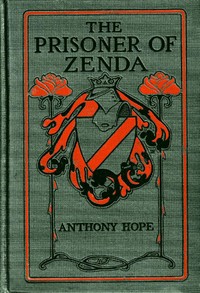
The prisoner of Zenda — Themes and Context
(0 User reviews)
452
Project Gutenberg
2006
Not confirmed
Love stories; Impostors and imposture -- Fiction; Adventure stories; British -- Foreign countries -- Fiction; Kings and rulers -- Fiction; Political kidnapping -- Fiction
Readers of public-domain and historical texts
Project Gutenberg digital edition
en
Edition facts
Words
58,437
Reading time
255 min
Text sections
23
The source record for The prisoner of Zenda — Themes and Context measures this digital text at 58,437 words, 4 hr 15 min estimated reading time, and 23 detected text sections.
The text analysis averages about 15.1 words per sentence, while the detected sections provide another way to judge how the source is divided.
Project Gutenberg metadata also associates the work with “Love stories,” connecting these edition facts with the source record’s subject description.
Source:
Project Gutenberg record #95
In Anthony Hope's 1894 adventure, an English gentleman's striking resemblance to a Ruritanian king leads him to impersonate the monarch, navigating court intrigue, a love triangle, and a daring rescue. The novel contrasts English sangfroid with continental passion, and its brisk chapters balance witty dialogue with suspenseful action.
Read the complete public-domain text at its original source.
Read on Project GutenbergThe Prisoner of Zenda opens not with a throne room or a conspiracy, but with a breakfast-table quarrel about hair color. Rudolf Rassendyll, a young English gentleman of leisure, is chided by his sister-in-law Rose for his idleness and his red hair—a trait that, as his brother Robert notes, “crops out once in a generation” along with a distinctive nose. This seemingly trivial domestic scene establishes the novel’s central mechanism: physical resemblance as a plot engine. The red hair links Rudolf to the royal Elphbergs of Ruritania, and within a few chapters he will be called upon to impersonate the kidnapped King Rudolf V. Hope’s narrative moves swiftly from drawing-room banter to high-stakes political theater, but the opening’s tone of amused self-deprecation never entirely disappears.
The Understudy’s Double Identity
Rudolf Rassendyll is introduced as a man who “knocks about” and does nothing, yet he proves remarkably quick-witted when thrust into the role of king. The novel’s tension derives from the gap between his casual English persona and the demands of Ruritanian kingship. He must learn to command, to dissemble, and to risk his life—all while maintaining the ironic detachment that marks his narration. When he dines with the conspirators, he notes that “if a man must needs be a knave, I would have him a debonair knave,” and he finds the villain Rupert Hentzau more appealing than his grim companions. This moral ambiguity complicates the adventure: Rudolf is not a pure hero but a man enjoying his own performance.
Gossip, Disguise, and the Inn at Zenda
Hope builds suspense through small, human details. A key scene takes place at a country inn, where Rudolf—still disguised as the king—flirts with a serving girl to extract information about a castle servant named Johann. The girl’s gossip reveals that Johann is “very busy at the Castle” and that he “sulks and stays away” after a romantic slight. This seemingly trivial intelligence becomes vital for the rescue plot. The novel repeatedly uses such domestic channels—a girl’s wounded pride, a servant’s routine—to advance the political intrigue. Rudolf’s ability to shift between regal command and easy familiarity with commoners is his greatest asset, and Hope renders these interactions with a lightness that prevents the adventure from becoming ponderous.
The Rhythm of the Chapters
The book’s twenty-two chapters are short and tightly paced, each ending on a note of anticipation. Titles like “The Secret of a Cellar,” “A New Use for a Tea-Table,” and “Young Rupert’s Midnight Diversions” promise action or ingenuity, and the text delivers. The narrative alternates between court scenes in Strelsau and clandestine operations in the forest and castle of Zenda. This back-and-forth creates a rhythm of exposure and concealment: Rudolf must play the king in public while plotting in private. The chapter “An Improvement on Jacob’s Ladder” hints at a physical feat, while “I Talk with a Tempter” suggests moral testing. Readers familiar with adventure serials will recognize the structure, but Hope’s crisp prose and the narrator’s wry voice keep the formula fresh.
Readers approaching The Prisoner of Zenda for the first time should pay attention to the way Hope balances action with character. The plot moves swiftly, but the narrator’s asides—his judgments of other characters, his self-aware humor—give the story a reflective dimension. The novel rewards attention to small details: a gesture, a piece of gossip, a change of clothing. And while the ending resolves the central conflict, the final chapter’s title, “Present, Past—and Future?”, leaves room for the reader to wonder what becomes of a man who has worn a crown and given it up.
I’ve always loved how The Prisoner of Zenda hides a quiet heart beneath its swordplay—that ache of a man playing a part he longs to claim. The same wistfulness lingers in Two Boys in Wyoming: A Tale of Adventure (Northwest Series, No. 3) — Reading Notes, where the frontier itself becomes a kind of mask, worn until the wearer forgets where the land ends and he begins. Both speak of borrowed courage, honestly worn.
There are no reviews for this eBook.
There are no comments for this eBook.
Reader reflection
Take a moment to reflect on this book
Create a short personal record of your experience with this book.
Your progress
0
/
10
2
Was reading this book enjoyable?
3
Is this a title you would suggest to others?
4
How much effort did this book require?
5
Would you like to discuss this book with someone?
6
How strong was your personal connection to the text?
7
Did the book offer a fresh perspective?
8
How understandable was the text?
9
Which lesson or insight stayed with you?
10