1

The Mayor of Casterbridge — Reading Notes
(0 User reviews)
72
Project Gutenberg
2006
Not confirmed
Psychological fiction; Fathers and daughters -- Fiction; Men -- England -- Fiction; Wessex (England) -- Fiction; Runaway husbands -- Fiction; Atonement -- Fiction; Mayors -- Fiction
Readers of public-domain and historical texts
Project Gutenberg digital edition
en
Edition facts
Words
123,137
Reading time
536 min
Text sections
46
This digital edition of The Mayor of Casterbridge — Reading Notes is described by source-level measurements including 123,137 words, 8 hr 56 min estimated reading time, and 46 detected text sections.
The text analysis averages about 18.3 words per sentence, while the detected sections provide another way to judge how the source is divided.
Project Gutenberg metadata also associates the work with “Psychological fiction,” connecting these edition facts with the source record’s subject description.
Source:
Project Gutenberg record #143
Thomas Hardy's novel traces the rise and fall of Michael Henchard, a man of stern character, through shifts in fortune, social standing, and personal relationships in the fictional Wessex town of Casterbridge. The narrative is structured around abrupt reversals, recurring images of silence and observation, and movement between public and private spaces.
Read the complete public-domain text at its original source.
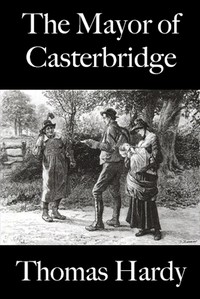
Read on Project GutenbergThe novel opens with a striking image of silence: a young couple and their child approach Weydon-Priors on foot, the man reading a ballad sheet, the woman walking virtually alone despite his proximity. Hardy emphasizes the "perfect silence they preserved," a detail that recurs throughout the work as characters withhold speech or speak through intermediaries. The man's "measured, springless walk" and "dogged and cynical indifference" establish a physical vocabulary for Henchard's character before any dialogue occurs. This early scene also introduces the motif of movement—the journey into town, the shifting of fustian folds—that will recur as characters traverse Casterbridge's streets, marketplaces, and private rooms.
Silence and Indirect Speech
From the opening paragraph, silence functions as a structural device. The couple's wordless progress is described in detail: the man "reading, or pretending to read," the woman receiving his taciturnity "as a natural thing." Later, characters frequently speak through hypotheticals or third-person proxies. Lucetta, for instance, recounts her own romantic dilemma as if it happened to a friend, using phrases like "she had been so far compromised" and "could she in honour dismiss the first?" Elizabeth-Jane, though younger, responds with judicial caution: "It wants a Pope to settle that!" These layered conversations—where true feelings are masked or delegated—create a pattern of indirection that shapes the novel's revelations and reversals.
The Gaze and Self-Survey
Hardy frequently positions characters as observers of themselves or others. When Lucetta asks for a looking-glass, Elizabeth eyes her "as a critic eyes a doubtful painting," and Lucetta anxiously surveys her own face, asking "Where am I worst?" This scene mirrors the novel's broader concern with how characters are seen and judged. Elizabeth, though the younger, plays "the part of experienced sage," delivering an "impartial verdict" on Lucetta's fading looks. The act of looking—at oneself, at another, or being looked at—becomes a recurring structural element, often preceding a shift in power or knowledge.
Movement Between Public and Private Spaces
The narrative moves deliberately between the open road, the town square, and interior rooms. The opening journey gives way to Casterbridge's streets and market, then to private conversations like Lucetta's confession to Elizabeth. In chapter XXV, Farfrae's visit to Lucetta creates a scene where Elizabeth sits "invisible in the room," an "awkward third point which that circle would not touch." These spatial arrangements—who is included, who is excluded, who watches from the margins—mirror the social hierarchies and emotional distances that drive the plot. Hardy uses the physical layout of rooms and streets to reinforce the characters' relative positions.
Recurring Details of Dress and Bearing
Hardy invests clothing and posture with meaning. The opening description notes the man's "short jacket of brown corduroy, newer than the remainder of his suit," the "fustian waistcoat with white horn buttons," and the "straw hat overlaid with black glazed canvas." These details are not merely decorative; they signal social standing and personal history. Later, Lucetta's concern about her appearance—"I wonder if I wear well, as times go!"—connects physical deterioration to emotional strain. The novel's attention to fabric, fit, and condition creates a visual lexicon for character change, as shifts in fortune are registered in the state of a coat or the set of a face.
Readers attentive to Hardy's structural patterns will notice how each reversal—in fortune, in love, in public esteem—is prepared by earlier details of silence, observation, or spatial arrangement. The novel rewards careful attention to what is not said, to who looks at whom, and to the precise description of a garment or a gesture. These recurring elements build a world where character is revealed through small, concrete signs rather than grand declarations.
Reading my notes on The Mayor of Casterbridge, I kept returning to that moment when Henchard stands silent in the crowd, watching his own ruin unfold. It made me think of another kind of quiet witness, the dreamer in A Dream of John Ball; and, A King's Lesson — Text and Context, who hears a past world speak its own fate. Both feel like listening to something inevitable.
There are no reviews for this eBook.
There are no comments for this eBook.
Reader reflection
Before you leave, reflect on the book
Use these questions to collect your thoughts before moving on.
Your progress
0
/
10
2
How much did you enjoy the reading experience?
3
Is this a title you would suggest to others?
4
How easy was the book to follow?
5
Did this book create an emotional response?
6
Did the book offer a fresh perspective?
7
How useful did the reading feel?
8
Could you follow the author’s main argument?
9
In one sentence, what did you learn?
10