1

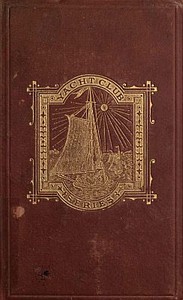
The Yacht Club; or, The Young Boat-Builder — Context and Discussion
(0 User reviews)
84
Project Gutenberg
2007
Not confirmed
Young men -- Conduct of life -- Juvenile fiction; Sailing -- Juvenile fiction; Yachts -- Juvenile fiction
Readers of public-domain and historical texts
Project Gutenberg digital edition
en
Edition facts
Words
69,055
Reading time
301 min
Text sections
7
For The Yacht Club; or, The Young Boat-Builder — Context and Discussion, the stored edition analysis reports 69,055 words, 5 hr 1 min estimated reading time, and 7 detected text sections.
The text analysis averages about 14.8 words per sentence, while the detected sections provide another way to judge how the source is divided.
Project Gutenberg metadata also associates the work with “Young men -- Conduct of life -- Juvenile fiction,” connecting these edition facts with the source record’s subject description.
Source:
Project Gutenberg record #23351
Oliver Optic's 1873 novel follows Don John, a young boat-builder, through yacht races and social entanglements on Penobscot Bay. The narrative shifts between brisk dialogue and descriptive passages, with a focus on concealment and reputation.
Read the complete public-domain text at its original source.
Read on Project GutenbergOliver Optic's The Yacht Club; or, The Young Boat-Builder opens with a dedication to a young friend and a preface that frames the story as an independent volume in the Yacht Club Series. The narrative voice moves between brisk, colloquial dialogue and more deliberate descriptive passages, a shift that becomes a key feature of the reading experience. The hero, Don John, is introduced as a young man of high aims, but the excerpts reveal a tension between his noble purposes and the mistakes he makes, particularly around concealment. The setting on Penobscot Bay provides a backdrop for yacht races and social gatherings, but the story's pace varies noticeably: rapid exchanges of dialogue in scenes of suspicion or courtship give way to slower, more reflective moments when characters weigh their choices.
Dialogue as a Driver of Pace
The excerpts show that Optic uses dialogue to accelerate the narrative, especially in scenes of tension or revelation. In one passage, Laud Cavendish and Donald engage in a rapid back-and-forth about a tin box and a meeting at Saturday Cove. The lines are short, often interrupted by actions like “replied Laud, after some hesitation,” which heighten the sense of unease. The pace slows when characters pause to reflect, as when Donald considers the awkwardness of answering Hasbrook’s questions. This alternation between quick exchanges and internal deliberation creates a rhythm that mirrors the characters’ shifting confidence.
Notably, the dialogue often carries subtext. When Nellie Patterdale teases Donald about being a “real lion,” the playful tone masks deeper feelings, and the pace of the conversation changes as Laud Cavendish interjects. Optic’s use of interruptions and asides keeps the reader alert to unspoken tensions.
The Weight of Concealment
A recurring structural element in the excerpts is the motif of hidden knowledge. Characters repeatedly withhold or seek information: Donald is “entirely satisfied” that Captain Shivernock had nothing to do with an assault, yet he fears violating confidence. The preface explicitly warns that concealment is dangerous, and the narrative bears this out through Donald’s internal conflict. The pace slows during these moral reckonings, as when Donald “did not wish to answer any questions” and felt the situation was “very awkward.”
Optic’s voice here is didactic but not heavy-handed; the lesson emerges from the character’s predicament rather than from authorial commentary. The excerpts suggest that the story’s tension derives less from external action than from the characters’ decisions about what to reveal. This focus on secrecy gives the novel a psychological dimension that balances the more straightforward adventure of yacht racing.
Setting and Social Ritual
The excerpts place characters in specific, named locations—Saturday Cove, Gilky’s Harbor, Mr. Rodman’s house—that anchor the story in a recognizable geography. The pace of the narrative often depends on the setting: open-water scenes like the launch of the Maud allow for expansive description and public praise, while domestic or garden settings, such as the collation under the trees, foster intimate conversations and social maneuvering. The shift from the boatyard to the garden table marks a change in tone from technical detail to social ritual.
Optic’s descriptions of these settings are functional rather than ornate, but they serve to ground the characters’ interactions. The mention of “the fine proportions and the workmanship of the Maud” ties the physical object of the yacht to the social status of its builder, reinforcing the link between craftsmanship and reputation that runs through the story.
Readers attentive to shifts in pace will find that Optic’s narrative rewards close attention to dialogue rhythms and moments of hesitation. The excerpts suggest that the most revealing passages are not the yacht races but the quiet exchanges where characters weigh their words. Approach the novel as a study in how young people navigate the gap between intention and action, and note how the setting of Penobscot Bay serves as more than a backdrop—it shapes the social and moral choices of the characters.
That rainy afternoon, I kept returning to Don John’s careful concealments in The Yacht Club, how reputation shifts like tidewater. The thought lingered into evening, and somehow I reached for Within The Enemy's Lines — Themes and Context, where secrecy carries graver weight. Same quiet watching, same burden of masks. The rain never noticed I’d switched books.
There are no reviews for this eBook.
There are no comments for this eBook.
Reader reflection
What was your reading experience?
Capture what you thought, learned, and would like to remember.
Your progress
0
/
10
2
How much did you enjoy the reading experience?
3
Would you recommend this book to another reader?
4
What was the reading difficulty like?
5
Which part made the strongest impression?
6
Would you like to discuss this book with someone?
7
How did the pace of the book feel?
8
How closely did the book connect with your experience?
9
What is the main idea you are taking away?
10