1


The Voice of Science in Nineteenth-Century Literature Representative Prose and Verse — Background and Themes
(0 User reviews)
1677
Project Gutenberg
2010
Not confirmed
Science; Literature, Modern; English literature -- 19th century; Science in literature
Readers of public-domain and historical texts
Project Gutenberg digital edition
en
Edition facts
Words
100,180
Reading time
436 min
Text sections
9
The source record for The Voice of Science in Nineteenth-Century Literature Representative Prose and Verse — Background and Themes measures this digital text at 100,180 words, 7 hr 16 min estimated reading time, and 9 detected text sections.
The text analysis averages about 28.2 words per sentence, while the detected sections provide another way to judge how the source is divided.
Project Gutenberg metadata also associates the work with “Science,” connecting these edition facts with the source record’s subject description.
Source:
Project Gutenberg record #31871
An anthology of 19th-century prose and verse selected by Robert Emmons Rogers, pairing scientific discourse with literary works. The excerpts reveal a tension between moral precepts and emotional faith, as seen in Matthew Arnold's critique of Christian morality and his praise of the Imitation.
Read the complete public-domain text at its original source.
Read on Project GutenbergRobert Emmons Rogers, an assistant professor of English at MIT, assembled this anthology to trace how scientific thinking shaped nineteenth-century literary expression. The excerpts show a persistent friction: writers simultaneously embrace empirical reason and seek a transcendent moral order. Matthew Arnold, for instance, contrasts the “moral precepts” of the Imitation with the “joyful and bounding emotion” he deems necessary for the masses. The collection does not simply celebrate science; it documents a century wrestling with what happens when faith in progress meets the limits of rational systems.
Arnold’s Moral Calculus
In the excerpt from Marcus Aurelius, Arnold engages directly with John Stuart Mill’s claim that Christian morality is “negative rather than positive, passive rather than active.” Arnold defends Christian ethics by citing the Imitation of Christ, calling it “the most exquisite document” after the New Testament. He quotes Latin maxims—“Vita sine proposito languida et vaga est”—and translates them as rules for daily discipline. Yet he immediately undercuts this defense: moral rules, he argues, work only for “the sage.” The mass of mankind requires “a tide of a joyful and bounding emotion.” This pivot reveals a central tension in the anthology: the conflict between rational precept and emotional faith.
The Editor’s Institutional Frame
Rogers’s academic position at the Massachusetts Institute of Technology is not incidental. The publisher’s note lists the volume as part of the “Atlantic Texts” series, marketed for classroom use. The front matter includes a full page of other textbooks—Atlantic Narratives, Essays and Essay-Writing—suggesting the anthology was designed for composition and literature courses. This institutional framing shapes the selection: the excerpts are chosen to illustrate a theme, not to represent the full arc of any single author. Readers should approach each piece as a specimen of how science and literature intersected in the nineteenth century, rather than as a complete argument.
Charity as the Final Word
The excerpt from Arnold’s essay ends with a striking rhetorical move. After weighing moral systems, he concludes that the greatest of the three theological virtues is Charity—not Faith or Hope. He writes, “the greatest of these is Charity,” echoing 1 Corinthians 13. This choice is significant: it places love above both rational ethics and emotional fervor. The anthology’s title promises “The Voice of Science,” but Arnold’s closing line suggests that science alone cannot supply the binding force of human community. The excerpt thus encapsulates the volume’s deeper concern: how to reconcile the authority of empirical knowledge with the enduring need for moral and spiritual cohesion.
Readers will find that the anthology’s value lies less in its completeness than in its juxtapositions. Arnold’s critique of Mill, the textbook apparatus, and the recurring appeal to emotion over rule all point to a century unsure whether science would save or unsettle. Approach each selection as a fragment of a larger debate, and note how the editor’s choices—especially the final emphasis on Charity—shape the conversation.
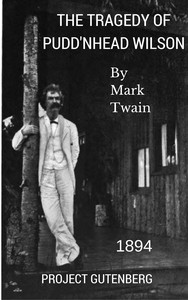
I kept thinking about how those old writers wrestled with faith and fact, never quite letting either win. It felt like holding two truths at once. That same ache echoed in The Tragedy of Pudd'nhead Wilson — Text and Context, where identity and judgment blur so quietly you almost miss the weight. Some books just sit with you afterwards, the way that one did with me.
There are no reviews for this eBook.
There are no comments for this eBook.
Reader reflection
Take a moment to reflect on this book
Create a short personal record of your experience with this book.
Your progress
0
/
10
2
Did this book hold your interest?
3
Would you encourage someone else to read it?
4
How much effort did this book require?
5
Could you see yourself revisiting this book?
6
How strongly did the book affect you emotionally?
7
Did any part of the book feel personally relevant?
8
Did you gain anything practical from the text?
9
What changed or sharpened your thinking?
10