1

Stand By The Union — Reading Companion
(0 User reviews)
51
Project Gutenberg
2006
Not confirmed
War stories; Steamboats -- Juvenile fiction; United States -- History -- Civil War, 1861-1865 -- Naval operations -- Juvenile fiction
Readers of public-domain and historical texts
Project Gutenberg digital edition
en
Edition facts
Words
72,380
Reading time
315 min
Text sections
10
This digital edition of Stand By The Union — Reading Companion is described by source-level measurements including 72,380 words, 5 hr 15 min estimated reading time, and 10 detected text sections.
The text analysis averages about 18.8 words per sentence, while the detected sections provide another way to judge how the source is divided.
Project Gutenberg metadata also associates the work with “War stories,” connecting these edition facts with the source record’s subject description.
Source:
Project Gutenberg record #18816
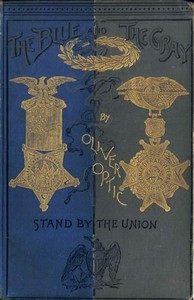
Oliver Optic's fourth 'Blue and Gray' volume follows Captain Christy Passford aboard the USS Bronx, where battlefield promotions, temperance pledges, and the weight of command test young officers amid Civil War naval operations.
Read the complete public-domain text at its original source.
Read on Project GutenbergCaptain Christy Passford, barely past his teens, commands the steamer Bronx with a crew drawn from the captured Vernon. The opening chapters establish a pattern of rapid promotion: Phil Camden is named acting second lieutenant, and Ralph Pennant is elevated to third lieutenant after a pointed interview about his drinking habits. Optic uses these appointments to dramatize how the Union Navy, strained by war, must rely on merit and character rather than seniority. The crew's cheers for each new officer signal that the men recognize natural leaders—a theme the author underscores with a direct comparison to how 'the masses of the people soon ascertain who are their natural leaders.'
Promotion and Character
Christy's method of selecting officers is anything but casual. He questions Pennant about his age, education, and experience as a mate, then abruptly asks, 'Do you ever drink whiskey, Pennant?' The seaman's reply—that he stopped drinking after learning it cost him a command—satisfies Christy, who appoints him on the spot. Optic presents temperance not as moralizing but as a practical qualification for leadership. The scene echoes Camden's earlier promotion, suggesting that the Bronx runs on a code where past failures can be redeemed by present discipline. The crew's cheers for both men confirm that the officers have earned respect through conduct, not rank.
Uniforms and Authority
When Pennant admits he has no uniform, Christy offers one from his own stateroom—but notes it is 'altogether too small' for the tall, stalwart seaman. This small detail highlights the makeshift nature of the Bronx's command structure. Pennant's lack of a proper uniform does not prevent his appointment; the crew 'all know me,' he says, and Christy promises to 'see what can be done in the morning.' Optic suggests that authority on a wartime vessel rests more on demonstrated ability than on outward trappings. The gap between the captain's small uniform and the lieutenant's large frame also subtly underscores the youth of the commander compared to his older subordinates.
The Weight of Command
Christy takes the deck at four in the morning, relieving the first lieutenant who had stood the mid-watch. The passage reveals the constant pressure on a short-handed crew: the first lieutenant serves as a watch officer because commissioned officers number fewer than three. Christy's decisions—promoting Camden and Pennant—are not merely administrative; they directly affect the ship's ability to function. Optic embeds the war's strain in these routine details. The captain's questioning of Pennant also shows a leader mindful of his ship's reputation, aware that a single bad officer could undermine morale. The Bronx is a vessel where every promotion carries weight, and Christy carries that burden visibly.
Readers attentive to the series' earlier volumes will recognize the Bronx and its crew from On the Blockade. Optic's preface notes that the story is set 'in the midst of the war of the Rebellion,' now thirty years past, and he addresses his 'younger readers' directly. The book rewards attention to how rank is earned and worn—not just through combat, but through the daily decisions that keep a ship ready for action.
I often recall how young Passford’s temperance pledge in Stand By The Union steadied him more than any order from the quarterdeck. There is a similar quiet strength in Grant Thornton’s ambitions—not for rank, but for honest work. Both boys carry that same solemn weight of duty, and I find myself musing on Helping Himself; Or, Grant Thornton's Ambition — Edition Insights as a kindred shelf-mate, speaking softly of character’s slow triumph.
There are no reviews for this eBook.
There are no comments for this eBook.
Reader reflection
Before you leave, reflect on the book
Use these questions to collect your thoughts before moving on.
Your progress
0
/
10
2
Did this book hold your interest?
3
Would you recommend this book to another reader?
4
Did the language feel accessible?
5
How strong was your personal connection to the text?
6
Did the book offer a fresh perspective?
7
How useful were the ideas in this book?
8
How much did the book move you?
9
What is the main idea you are taking away?
10