
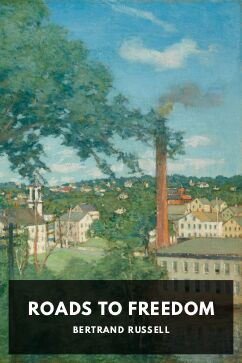
Roads to Freedom - Bertrand Russell
Forget what you think a philosophy book is like. 'Roads to Freedom' isn't a dry lecture. It's Bertrand Russell, fresh from opposing World War I and sitting in prison for his beliefs, laying out his case for a better world. Written in 1918, it's his direct response to the chaos and injustice he saw around him.
The Story
There's no plot in the traditional sense. Instead, Russell acts as a guide through the major political ideas of his day that promised liberation. He starts by critiquing the system he lived under, then spends the heart of the book exploring two big 'roads': Marxist Socialism and Anarchism. He explains their core goals—like common ownership of industry or the complete abolition of the state—with remarkable clarity. But Russell is no cheerleader. He rigorously tests each idea. He asks how it would work in practice, where it might fail, and what it truly means for individual freedom. The book concludes with his own cautious, hopeful vision, blending what he finds best from each road.
Why You Should Read It
I love this book because Russell writes like a real person trying to solve a real problem. He's not hiding behind fancy words. His passion and his doubts are right there on the page. When he worries that a socialist state could become a new tyranny, or that anarchism might not account for human greed, you feel his genuine struggle to find a workable answer. Reading it today is startling—so many of our current debates about work, technology, government power, and inequality are right here, discussed with incredible foresight. It gives you the intellectual tools to understand the roots of modern politics.
Final Verdict
This is the perfect book for anyone feeling politically curious or disillusioned. It's for the reader who sees headlines about capitalism or socialism and wants to go deeper than the slogans. You don't need a degree in philosophy; Russell's writing is accessible and direct. If you enjoyed the big ideas in novels like 1984 or The Dispossessed, this is the non-fiction foundation they were built on. It's a compact, powerful dose of clear thinking from a man who dedicated his life to the question at its heart: how can people be free?
This book is widely considered to be in the public domain. You can copy, modify, and distribute it freely.
Elizabeth Rodriguez
5 months agoThe layout of the digital version made it easy to start immediately, the attention to detail regarding the core terminology is flawless. A rare gem in a sea of mediocre content.
Karen White
4 months agoVery satisfied with the depth of this material.
Paul Hernandez
1 year agoI appreciate how this edition approaches the core problem, the nuanced approach to the central theme was better than I expected. I'm glad I chose this over the other alternatives.
Paul Harris
2 months agoFinally found a version that is easy on the eyes.
Thomas Moore
6 months agoThe balance between academic rigor and readability is perfect.