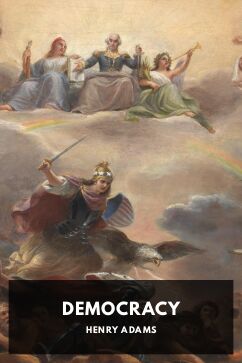
Democracy - Henry Adams
Henry Adams, the great-grandson of a president, wrote 'Democracy' anonymously in 1880, and it caused a quiet scandal. People spent years guessing who had the inside scoop to write something so biting. The story itself is deceptively simple.
The Story
Madeleine Lee, a young widow from New York, is disillusioned by life after a personal tragedy. She decides to move to Washington D.C. with her sister not for society, but to study politics at its source. She wants to see the engine of democracy up close. She's quickly swept into the social whirl, meeting senators, diplomats, and the magnetic Senator Silas P. Ratcliffe—a powerful figure from the western states who many think could be the next president. Madeleine is fascinated by his force and his ideas about governing. But as she gets closer, she starts to see the cracks. Whispers about a shady deal in his past begin to surface. The book becomes a tense, quiet investigation: is Ratcliffe a great man flawed by necessity, or is he the embodiment of a corrupt system? Madeleine has to decide what she believes in, and what price she's willing to pay for proximity to power.
Why You Should Read It
What blew me away was how fresh this 140-year-old book feels. Adams doesn't give us heroes and villains in the classic sense. He gives us smart people making questionable choices for what they think are good reasons. Madeleine is a fantastic character—she's our eyes into this world, both cynical and hopeful. The political maneuvering, the gossip as currency, the way ideals get bent… it’s all here. You read it and think, 'Wow, nothing has really changed.' It’s a brilliant, slow-burn character study that asks if you can truly know what goes on behind closed doors, and if you’d want to.
Final Verdict
This isn't a fast-paced political thriller. It's a sharp, witty, and sometimes painfully observant novel for anyone who loves character-driven stories or is fascinated by the messy human reality behind political ideals. Perfect for fans of novels about society and manners, like Edith Wharton, or anyone who enjoys a good, smart story about power and morality. If you've ever wondered how things *really* get done, Adams offers a masterclass from the Gilded Age that still rings true today.
This title is part of the public domain archive. Distribute this work to help spread literacy.